How to treat several high-altitude parabolic falling objects tragedies that set off public opinion? Expert: use heavy code
CCTV News:Parabolic falling objects in the sky are called "the pain hanging over the city". With some tragedies happening in cities with high-rise buildings, this social problem that threatens people’s "overhead safety" has also aroused public heated discussion. So what should be done to prevent falling objects from high altitude? How to judge the infringer? Today (23rd) morning, china law society organized a symposium on the rule of law for falling objects from high altitude. Let’s listen to the opinions of experts and scholars.
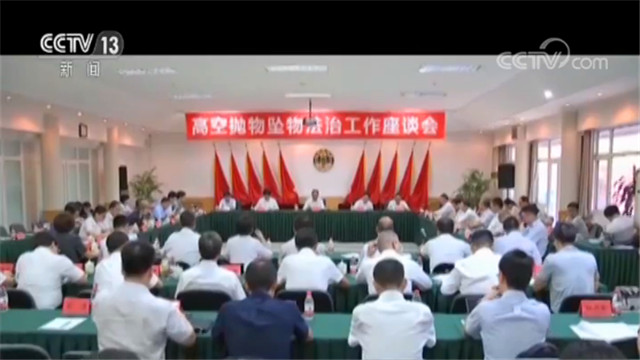
Around the legal issues related to throwing objects and falling objects at high altitude, more than 20 experts and scholars put forward opinions and suggestions from the aspects of legislation, law enforcement, justice and law-abiding.
In recent years, whenever there is a tragedy of throwing objects and falling objects at high altitude, public opinion can always be quickly detonated. On June 13 this year, a 5-year-old boy was injured in the head by a glass window falling from the sky in a community in Futian District, Shenzhen, and was rushed to the hospital. Due to the serious injury, the rescue was invalid and he died unfortunately. The police said that this incident was an accident.

On the afternoon of June 19th, a 10-year-old girl who came home from school was hit in the head by a high-altitude parabolic object at Times Square, No.8 Dongbao Road, Nanjing. On the night of the incident, the police in Nanjing Gulou reported that the girl was injured by an 8-year-old boy throwing objects at high altitude.
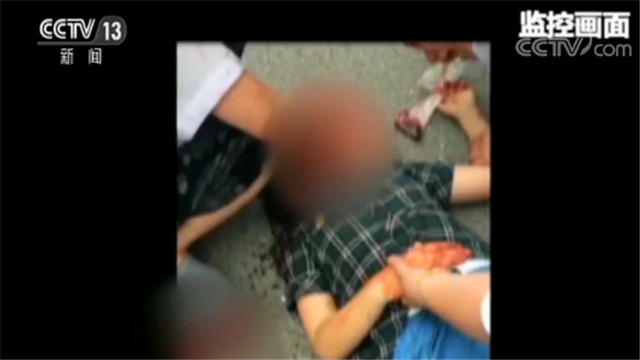
One by one, fresh lives have been hit hard, or even passed away unfortunately, which not only brings a heavy blow to their families, but also challenges the bottom line of urban safety and civilization.
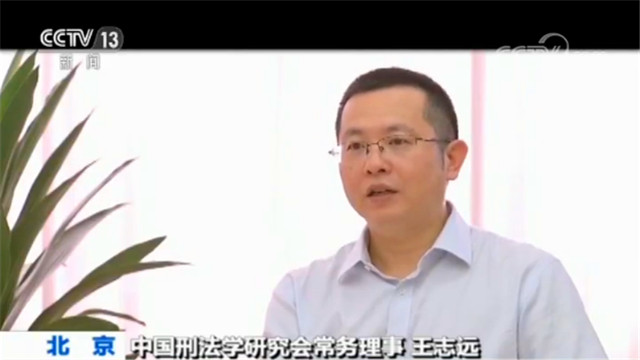
Wang Zhiyuan, executive director of China Criminal Law Research Association, said: "Parathrowing at high altitude is an illegal act. Legislation, law enforcement, judicature and law-abiding should strictly understand this harm, and should be explicitly prohibited and punished by law. We should put high-altitude parabolic objects into prison as soon as possible through the amendment of the criminal law, and investigate the criminal responsibility of high-altitude parabolic objects according to law. Only by using heavy penalties for offenders can we better play the role of criminal law in punishing crimes and better protect people’s life safety and health with the rule of law. "
For a long time, in judicial practice, cases of throwing objects and falling objects from high altitude have presented various complicated problems, such as difficulty in investigation and evidence collection, trial and execution. In this tragedy in Shenzhen in June this year, the glass that hit the boy fell from the home of a resident, and the actual user of the house was a tenant. After the incident, how to divide the responsibilities of the tenant, the owner and the property management company has also become the focus of public discussion. This series of complicated questions need to be clearly answered by the law.
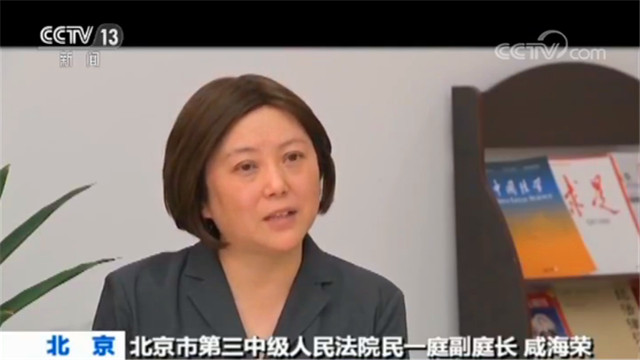
Xian Hairong, vice president of the People’s Court of Beijing No.3 Intermediate People’s Court, said: "For example, how to determine the infringement facts of such cases, including who should bear the tort liability after the infringement facts occur, does exist a difficult problem in practice. There is also the principle of rules. From the perspective of tort liability law, the set principles include fault liability and fault presumption, so which principle is applied by different responsible persons, and the final result is different. In other words, whether the victim’s own responsibility should also be considered in the occurrence of this damage result. For example, his car should not be parked in this position, he is parked here, the place he is going is not allowed to go, he is gone, and so on. These are all places that need to be regulated urgently in tort liability. "
Back in 2000, an ashtray in a high-rise building in Chongqing fell, injuring passers-by. The court ruled that the users of the whole building should be jointly compensated unless they can prove that they didn’t do it themselves. This case is also known as the first case of "compensation for falling objects without owners at high altitude" in China.
In 2001, a residential building in Jinan dropped a chopping board and hit an old man, who died after being rescued. When hearing this case, the court held that because the plaintiff could not determine the specific infringer, it ruled to dismiss the prosecution according to the relevant provisions of the Civil Procedure Law.
From the above cases, it can be seen that for a period of time, due to the lack of clear legal provisions, the court did not have a unified and clear basis for hearing such cases.
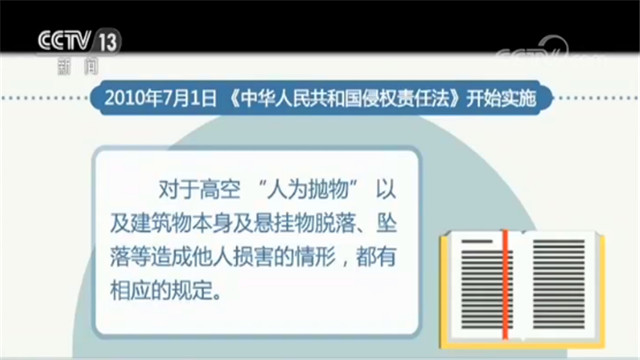
On July 1, 2010, the Tort Liability Law came into effect, in which there are corresponding provisions for "man-made parabolic objects" at high altitude, as well as cases where the building itself and its hanging objects fall off and cause damage to others. Among them, Article 87 stipulates: If throwing objects from a building or falling objects from a building causes damage to others, and it is difficult to determine the specific infringer, in addition to being able to prove that he is not an infringer, the user of the building who may have caused the damage shall be compensated. This law was established in line with the principle of fairness, and it also played a protective role for the injured party in practice, but on the other hand, it is also called the "falling objects from high altitude" clause. Because except the real infringer, the others who are punished are not responsible.
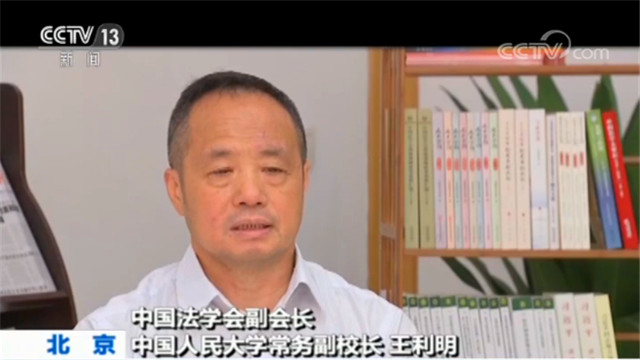
Wang Liming, Vice President of china law society and Executive Vice President of Renmin University of China: "This article 87 is meant to be based on prevention and relief for this unfortunate victim. That is to say, in this case, if the real actor can’t be found, then the property user who may harm will give the victim appropriate compensation. Its original intention is not to let the victim bear the loss completely in the end. However, looking at this regulation now, there are still some omissions, and some places are still not very clear. "
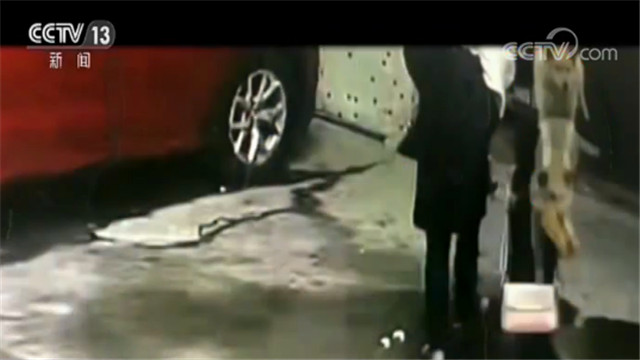
The line of sight turned to Baiyun District, Guangzhou. In April 2018, under a factory building, a big dog fell from the sky and smashed Ms. Zhang passing by, causing her to be paraplegic. Since the owner of the dog could not be found, the court issued an announcement to collect clues about the incident and the owner of the dog, but the owner of the dog remained a mystery. In desperation, Ms. Zhang took the owner of the factory and the residents of the whole building to court. For Ms. Zhang, if she can’t find a specific infringer, she can only get some compensation according to the provisions of Article 87 of the Tort Liability Law. For the households who become defendants, she is also under pressure because of this lawsuit. At present, this case is still under trial.
It is difficult to determine the specific infringer has always been a difficult problem in cases of throwing objects or falling objects from high altitude. Experts say that Article 87 of the Tort Liability Law often makes people mistakenly think that the obligation to determine the specific infringer is borne by the victim, and the victim cannot identify the specific infringer before applying this article, which is not conducive to the protection of the victim. Therefore, some experts suggested adding provisions in the Tort Liability Code of the Civil Code, stating that after throwing objects or falling objects from high altitude cause damage to people, the relevant authorities should first identify the perpetrators in time.
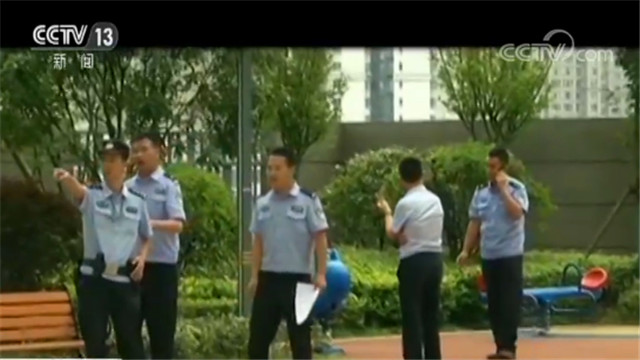
Wang Liming, Vice President of china law society and Executive Vice President of China Renmin University: "Because this provision used to give people the feeling that it was difficult to find the perpetrator, it seemed that the victim went to find the perpetrator himself, and the victim could not find the perpetrator, so in the end, it was shared by the owners who might harm. This is a misunderstanding. Looking for the perpetrator, although the victim has the obligation to look for him because he filed a civil lawsuit, it should be searched by the public security organ first. Why? Because this tall building is caused by parabolic damage, it is not only an infringement, but also the vast majority of this tall building parabolic damage constitutes a crime. Because as we said just now, throwing such objects from upstairs often causes great damage to passers-by, causing death, injury and disability, which seriously endangers public safety. This definitely constitutes a criminal offence, so the public security organs should certainly investigate, expose and find the real perpetrators. If we say that we can find the real actor, we will not hesitate, then the actor should bear the responsibility. Because this kind of damage is a behavioral responsibility, the actor should of course be liable for the consequences of the damage he caused. "
On August 22nd, the Draft Tort Liability of the Civil Code was submitted to the 12th meeting of the 13th the National People’s Congress Standing Committee (NPCSC) for the third deliberation, in which it was also added that "the relevant authorities should investigate in time according to law to find out the responsible person" in case of throwing or falling objects from high altitude, and it was clear that "it is difficult to determine the specific infringer after investigation", so the provision of compensation by the users of the buildings who may harm was applied. If the user of the building who may harm finds the infringer after compensation, he has the right to recover from the infringer.
Experts said: Parabolic objects and falling objects at high altitude are not only a civil tort problem, but also do harm to public safety. Therefore, it should be further explicitly prohibited in legislation, and such illegal acts should be stopped by legislative measures, especially the punishment measures in legislation.
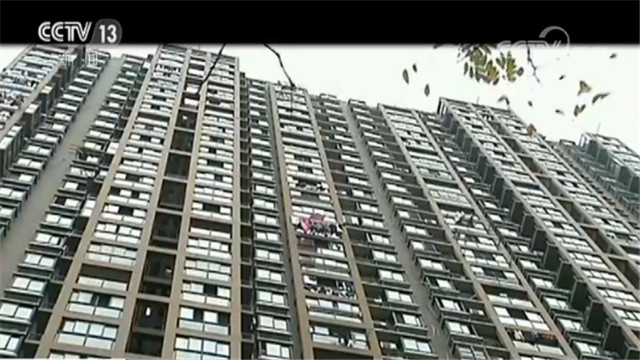
Ma Huaide, President of china law society Administrative Law Research Association and President of China University of Political Science and Law, said: "We suggest that the Law on Public Security Administration Punishment should be amended as soon as possible, and one item should be added to the section endangering public safety, and one item should be added to Article 35 as the fifth item. It is clearly stipulated that throwing objects at high altitude, or failing to take safety measures to cause hanging objects in the air to fall off, causing casualties or property damage, shall be liable for compensation, and shall be determined as an illegal act. In terms of criminal law, it can be compared with this law on public security administration punishment, that is, criminal responsibility can be investigated for those who cause serious harmful consequences, which can be linked with the law on public security administration punishment itself. "
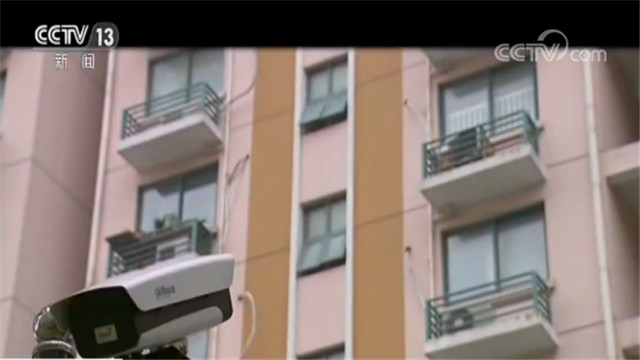
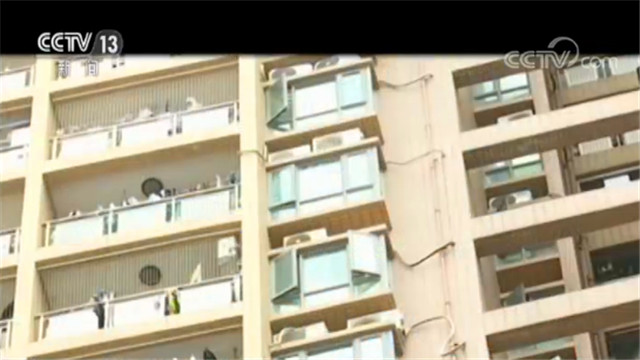
In addition to legal means, technical means are also indispensable to prevent and severely punish high-altitude parabolic objects and falling objects. Taking Shanghai as an example, this picture comes from a newly installed intelligent identification system for falling objects in a community in Shanghai. This device seems very simple. A camera is set up on the opposite side of the residential building. When there is a dynamic object falling from a height, the system will automatically capture it. This system can not only accurately lock the parabolic objects, solve the problem of obtaining evidence of parabolic objects and falling objects at high altitude, but also play a warning role for residents. At the symposium, experts believed that to solve the problem of falling objects from high altitude, we must take a multi-pronged approach, and take measures in legislation, justice, law enforcement and publicity and education of the rule of law to reduce the situation of throwing objects and falling objects from high altitude.