Why did Kandinsky lead the painting art to the abstract world?
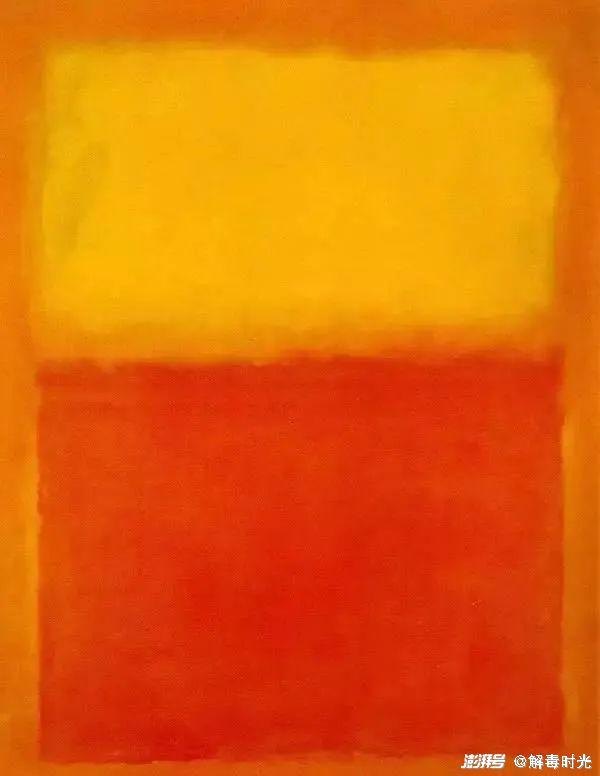
If a child is allowed to watch these works in front of Roscoe’s Orange and Yellow, Newman’s Achilles and mondriaan’s Composition of Red, Yellow and Blue, the child will proudly say, "I can draw them too". If an adult is allowed to appreciate these works, it may not be long before they will have a helpless doubt. Is this art? Maybe turn around and watch Warhol’s Golden Monroe or Jones’s Flag.
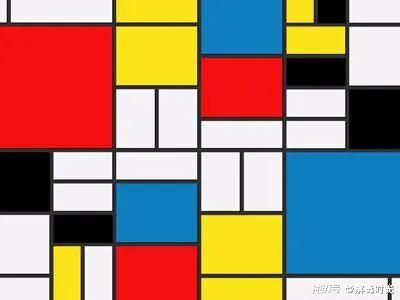
But on the whole, contemporary art has gone further and further in the direction that people can’t understand, which will inevitably make people wonder, "Is this the natural trend of art, or is it deliberate by artists?" If we want to solve these problems, we should go back to the embryonic stage of abstract art, and perhaps we can find the reasons for all this in an artist who was regarded as a rebel pioneer at that time.
If you need to identify a person, Kandinsky is undoubtedly the best candidate. Wassily kandinsky was born in Moscow in 1866. He loved painting as a child, but it was not until he finished his legal studies at the age of 30 that he devoted himself to painting, gave up his stable professorship and went to Munich to study painting. By 1923, his presentation of color was perfect and as precise as science, and he also taught at the famous Bauhaus school. Kandinsky moved to Paris during World War II and died in 1944.
Kandinsky, together with mondriaan and Malevic, is regarded as the pioneer of abstract art, but Kandinsky is more outstanding in terms of the thoroughness of abstract painting and the study of abstract art theory. His essays on the Spirit of Art in 1911, On Form in 1912, Point, Line and Surface in 1923, and On Concrete Art in 1938 are all classic works of abstract art, which are the key to deciphering the code of modern abstract art.
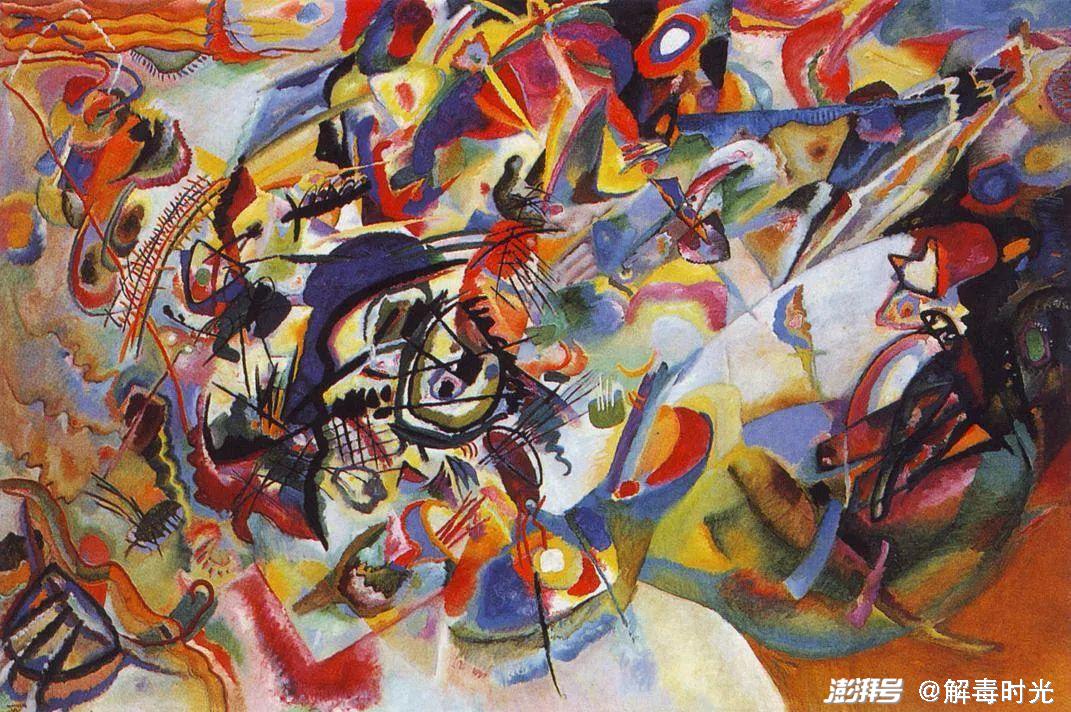
However, if we want to understand the opportunity of the development of modern abstract art through Kandinsky, we should first simply trace back the artistic concept, especially the change of the concept of painting. As early as in ancient Greece, Plato thought that art was "imitation", but the imitation he said was not an imitation of nature, but a perfect "rational" imitation of his ideal thing.
Plato himself did not admire art, but his imitation theory was handed down all the way. Leonardo da Vinci once said, "The most praiseworthy painting works are those that can depict things as they are." It can be seen that in the classical period of western painting, its focus was on "object image", that is, the reaction to the painting object (real thing).
The biggest impact on painting art should be the emergence of photography technology, which makes painters feel threatened by science-since photography can perfectly reproduce objects, what direction should painting develop? At this time, a group called Impressionist painters appeared in history. They answered this question with their own exploration of works, and painting art started the modern process by them, and also started the revolution completely divorced from objects.
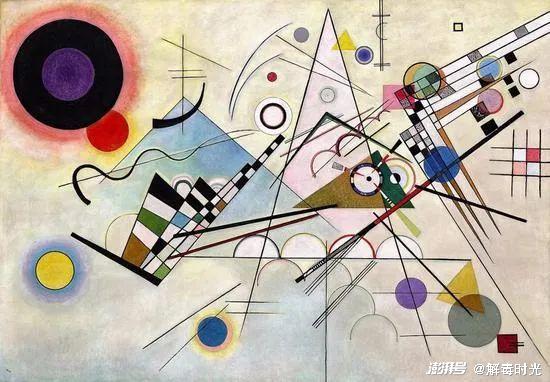
In Spirit in Art, Kandinsky summarized the complex ways of creating paintings into three categories:
First, the direct impression from nature is expressed in pure painting form. I call it "impressionism".
Second, it originates from the subconscious, and it is an intangible and spontaneous expression of inner character. I call it improvisation.
Third, the expression originated from slow emotional brewing has undergone almost harsh inspection and processing. I call it "constructive". In this composition, reason, consciousness and will all play a guiding role, but everything ultimately depends on feeling and has nothing to do with measurement.
The appearance of Impressionism is the beginning of the resistance to "physical images", and the result will inevitably lead to a complete betrayal of the classical imitation concept expressed by "abstraction".
Kandinsky believes that the core issue of art has changed from "how to express" to "what to express". That is, in the field of classical painting, painters pay attention to techniques, colors, perspectives, and whether objects can properly express their themes, all of which remain at the level of how to express them. When entering the field of modern art, artists go further in the exploration of the original techniques, and what to express with art is the starting point and the end point of all artistic behaviors.
"Not painting, but painting" is Kandinsky’s self-demand. Only by getting rid of the imitation of things can the painter truly enter a free expression situation, and the pure construction of pictures can reflect the "internal drive" that Kandinsky pursues. In his paintings, Kandinsky pursues the human spirit, which is the transcendence of reality, and in the transcendence, he obtains a sacred spiritual experience close to religion.
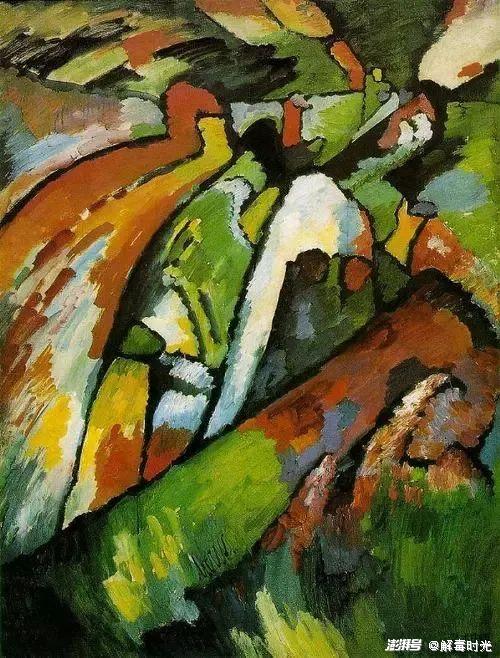
"At present, the expression of every art tends to be non-reappearance, abstraction and internal structure." By understanding Kandinsky’s requirements for art, we can understand that abstract works will inevitably appear in Kandinsky’s artistic career. Artists regard free expression as their pursuit and break the inherent form of expression as the direction of breakthrough, then the simulation of objects will inevitably be completely abandoned in the field of painting.
Of course, Kandinsky does not deny objects. He thinks that the core elements of painting are form and color, just as Picasso’s works pursue more form, while Matisse shows more colors.
As for form, Kandinsky thinks that form is the external expression of inner meaning, which aims at either depicting concrete two-dimensional objects or maintaining purely abstract entities. Therefore, the form can take two paths: pure image and pure abstraction.
However, the problem is that there is no pure object image, that is, 100% reduction of objects. Even in photographic works, there are many problems such as angles, and it is impossible to show objects purely. Therefore, Kandinsky believes that the expression of pure object images will inevitably move towards the road of "idealization" and "stylization". Just like the popular art we are familiar with, it is basically the pursuit of object-oriented style expression.
Pure abstraction can completely exist in the art of painting. After being separated from the object, pure abstraction can give the author the maximum freedom of expression, and at the same time, it also removes the interference of the object, and painting becomes the carrier of the author’s spiritual activities completely.
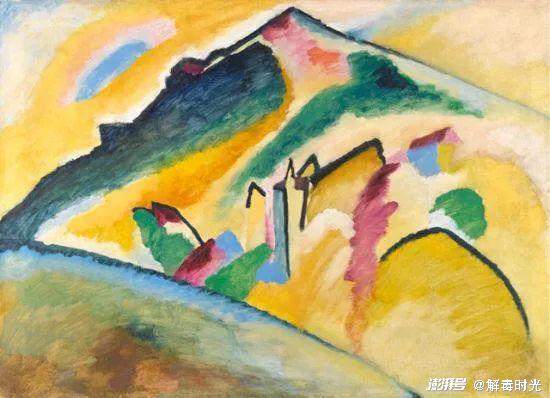
Therefore, Kandinsky chose the freest, but perhaps the most risky and incomprehensible road, and expressed his inner driving force of art with pure forms, namely points, lines and surfaces, and colors. He believes that this driving force of art has three major factors: personality, style and pure art. In pure abstract works, Kandinsky showed his own personality, created his own style, and completed the pursuit of true and pure art.
In Kandinsky’s abstract works of art, he has constructed a complete set of expressions. In this world, colors are dynamic, emotional and at the same time have sounds, while points are silent words, lines are the movement of points, and surfaces are the interaction of lines. As a result, Kandinsky’s works have formed a set of expression codes with the most basic forms and colors. In other words, all abstract works are cryptic expressions, and the most interesting thing about them is that the key of this cipher is in the mind of every viewer, and everyone can unlock a Kandinsky or mondriaan that belongs to them completely, which may be the unique charm of modern abstract art..