WHO Traceability Research Report: It is "extremely impossible" for Covid-19 to be introduced from the laboratory.
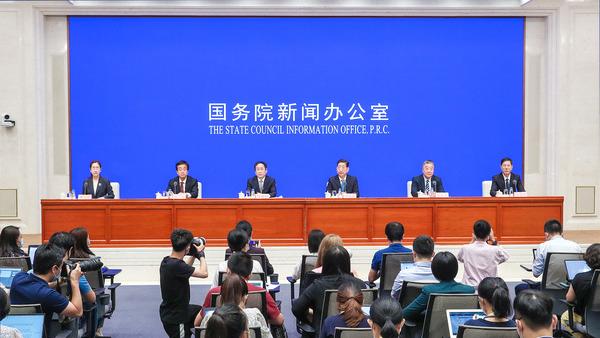
Cctv newsOn July 22nd, the State Council held a press conference on the traceability of Covid-19.
Ceng Yixin, deputy director of the National Health and Wellness Commission, introduced that on March 30th this year, the World Health Organization officially released the joint research report on global traceability research in Covid-19: China convened by WHO, and the global traceability research made a good start.
Ceng Yixin said that this traceability research report is the China part of the global traceability research, and the expert group came to the following conclusion: The coronaviruses found in bats and pangolins, which are most closely related to Covid-19, have the highest homology with Covid-19 in terms of sequence, but these viruses are still not enough to prove that they are the direct ancestors of Covid-19. Although the homology is high, there is still a certain gap.
Combined with the research results of clinical epidemiology, animal and environmental detection, the joint expert group finally determined several possibilities of virus emergence: first, the direct spillover of zoonotic diseases is "possible to more likely", that is, the direct spillover from animal hosts to people is "possible to more likely". Secondly, it is "probable to very probable" to introduce the virus through an intermediate host. Generally speaking, it means that the natural host of the virus is an animal, and the animal transits to humans through an intermediate host. This is "probable to very probable". Third, it was introduced through the cold chain. In some sporadic epidemics in various places last year, it was found that cold chain transmission might introduce viruses, so it was considered possible. The last possibility, laboratory introduction is "extremely impossible", and the English expression is "Extremely Unlikely", which is such a research conclusion.