The State Council Information Office held a press conference on the import and export situation in the first three quarters of 2023.
The State Council Press Office held a press conference at 10 am on Friday, October 13th, 2023, and invited Lu Daliang, spokesperson of the General Administration of Customs and director of the Statistics and Analysis Department, to introduce the import and export situation in the first three quarters of 2023 and answer questions from reporters.
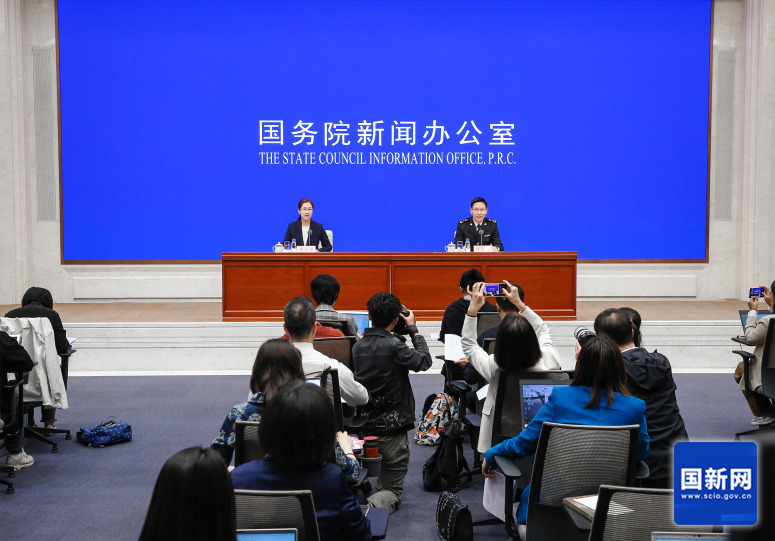
The picture shows the press conference. (photo by Liu Jian)
Shou Xiaoli, deputy director and spokesperson of the State Council Information Office:
Good morning, ladies and gentlemen! Welcome to the press conference of the State Council Information Office. Today, we have a routine release of economic data. We are very pleased to invite Mr. Lu Daliang, spokesman of the General Administration of Customs and director of the Statistics and Analysis Department, and ask him to introduce the import and export situation in the first three quarters of 2023 and answer your questions of interest.
Next, we first invite Mr. Lu Daliang to make an introduction.
Lu Daliang, spokesperson of the General Administration of Customs and director of the Statistical Analysis Department:
Good morning, ladies and gentlemen, journalists and friends! Welcome to today’s press conference. Nice to meet you again. I’ll first report on China’s import and export situation in the first three quarters of this year, and then answer your questions of interest.
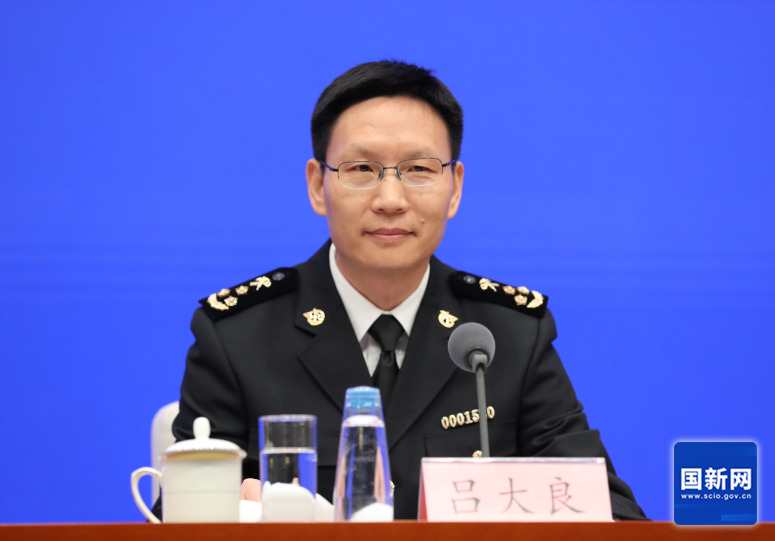
The picture shows Lu Daliang, spokesperson of the General Administration of Customs and director of the Statistical Analysis Department. (photo by Xu Xiang)
In the first three quarters of this year, in the face of the complicated and severe external environment and multiple domestic difficulties and challenges, under the strong leadership of the CPC Central Committee with the Supreme Leader as the core, China adhered to the general tone of striving for progress while maintaining stability, the overall economy rebounded, high-quality development was solidly promoted, and the import and export of goods trade operated smoothly and positively. According to customs statistics, China’s total import and export value in the first three quarters was 30.8 trillion yuan, a slight decrease of 0.2% year-on-year. Among them, the export was 17.6 trillion yuan, a year-on-year increase of 0.6%; Imports reached 13.2 trillion yuan, down 1.2% year-on-year. Specific analysis, mainly has the following five characteristics:
First, the scale of foreign trade has increased steadily, hitting a monthly high in September. From a quarterly perspective, imports and exports rose quarter by quarter, with the first, second and third quarters being 9.72 trillion yuan, 10.29 trillion yuan and 10.79 trillion yuan respectively. From a monthly perspective, the import and export in September was 3.74 trillion yuan, an increase of two consecutive months from the previous month, and the scale reached a new high in a single month in the year.
Second, the import and export of private enterprises grew rapidly. In the first three quarters, China’s private enterprises imported and exported 16.34 trillion yuan, up 6.1% year-on-year, accounting for 53.1% of China’s total import and export value. In the same period, the import and export of foreign-invested enterprises was 9.42 trillion yuan, and that of state-owned enterprises was 4.95 trillion yuan, accounting for 30.6% and 16.1% respectively.
Third, the import and export of countries that jointly build the "Belt and Road" is better than the whole. In the first three quarters, China imported and exported 14.32 trillion yuan to countries that jointly built the "Belt and Road", up 3.1% year-on-year, accounting for 46.5% of the total import and export value. This year marks the 10th anniversary of the "One Belt, One Road" initiative. In order to fully demonstrate the achievements made by China and the countries that have jointly built the Belt and Road in the past decade, we have recently compiled the trade index of China and the countries that have jointly built the Belt and Road, which has risen from 100 in the base period of 2013 to 165.4 in 2022, and the role of jointly building the Belt and Road in promoting trade has been continuously enhanced.
Fourth, the proportion of exports of mechanical and electrical products increased. In the first three quarters, the export of mechanical and electrical products in China was 10.26 trillion yuan, up 3.3% year-on-year, accounting for 58.3% of the total export value, up 1.5 percentage points over the same period last year. Among them, automobiles and their spare parts, ships and electrical equipment increased by 48.2%, 26.8% and 16.2% respectively. In the same period, the export of labor-intensive products was 3.07 trillion yuan, accounting for 17.5%.
Fifth, the import of bulk commodities and consumer goods expanded. In the first three quarters, China’s imports of energy, metal ore, grain and other bulk commodities increased by 16.5% year-on-year. Among them, energy products such as crude oil, natural gas and coal were 860 million tons, an increase of 31.8%; Iron, aluminum and other metal ores reached 1.086 billion tons, an increase of 7.8%. In the same period, imported consumer goods reached 1.46 trillion yuan, an increase of 3.1%. Among them, dried and fresh fruits and nuts, medical and health products increased by 22.8% and 18.5% respectively.
Generally speaking, under the general environment of unstable world economic recovery, China’s foreign trade has withstood the pressure, maintained a stable scale and excellent structure, and accumulated positive factors. It is believed that with the continuous improvement of China’s economic operation and the continuous enhancement of endogenous power, the effectiveness of various pragmatic measures to stabilize foreign trade will continue to play, the import and export operation situation will be more stable, the quality and efficiency will be further improved, and the goal of promoting stability and improving quality will certainly be achieved.
Customs is responsible for guarding the country and promoting development. This year marks the 20th anniversary of the implementation of the customs title system. Recently, the General Secretary of the Supreme Leader wrote back to all the customs officers in Hongqilafu, putting forward ardent expectations for the customs system to better perform its duties and missions, pointing out the direction for us to do a good job in customs work in the new era and new journey, and providing fundamental follow-up. The national customs will thoroughly study and implement the important instructions of the Supreme Leader General Secretary on customs work in the new era and the spirit of important reply, accelerate the construction of smart customs and the action of "strengthening the country through smart customs", build a national security barrier, promote high-quality development and high-level opening up, be a national guardian who can reassure the party and satisfy the people, and make positive contributions to the construction of a strong country and national rejuvenation.
thank you
Shou Xiaoli:
Thank you for your introduction. Let’s begin to ask questions. Please inform your news organization before asking questions.
Phoenix TV reporter:
Actively expanding imports is an important part of China’s high-level opening to the outside world. How do you evaluate the current import situation in China? In addition, the 6th China International Import Expo will be held. What are your expectations for the import trend in the next stage? In addition, what has the Customs done to protect China International Import Expo(CIIE)? Thank you.
Lv daliang:
Thank you for your question. China is the second largest economy in the world, carrying nearly one-fifth of the world’s population and creating nearly 30% of the world’s manufacturing added value. It is the world’s most potential big market. For a long time, China has adhered to the strategy of expanding imports and has been the second largest import market in the world for 14 consecutive years. In the first three quarters of this year, China’s foreign trade imports still maintained a good momentum, showing many bright spots in terms of scale, quantity and category structure. Mainly manifested in:
First, the import scale is rising quarter by quarter, and the import trend of independent sources is improving. In the first, second and third quarters, China imported 4.23 trillion yuan, 4.39 trillion yuan and 4.58 trillion yuan respectively, and the scale was expanded quarter by quarter. Among them, China’s imports from Latin America, ASEAN and the European Union have all increased for two consecutive quarters, and the growth rates in the third quarter were 8.5%, 6.3% and 2.6% respectively.
Second, the import volume has steadily increased, and the role of ensuring supply and stabilizing the chain has continued to play. China’s import volume has increased year-on-year for eight consecutive months, with a cumulative increase of 2.6% in the first three quarters. In particular, the import volume of resources and energy products and key components to meet domestic production needs has steadily expanded, such as crude oil, natural gas and metal ore, which increased by 14.6%, 8.2% and 7.8% respectively; The import volume of computer central processing parts and aircraft parts also increased by 42.9% and 15.9% respectively.
Third, import access is open and diversified to better meet the needs of people’s livelihood consumption. Up to now, China has established customs inspection and quarantine cooperation relations with 171 countries and regions, and signed nearly 400 international cooperation documents on agricultural products and food access. In the first three quarters, China’s imports of agricultural products increased by 8.6%, of which dry and fresh fruits and nuts, alcohol and beverages increased by 22.8% and 21% respectively. At the same time, with the steady expansion of domestic consumer demand, the import of some personalized and upgraded consumer goods has increased. In the first three quarters, China’s imports of jewelry, watches and clocks, health care products, shoes and boots increased by 74.3%, 18.9%, 18.5% and 9.2% respectively.
Expanding imports is the proper meaning for China to accelerate the construction of a new development pattern, and it is also beneficial for all countries in the world to share China’s development opportunities. Next month, the 6th China International Import Expo(CIIE) will be held in Shanghai. On the basis of summarizing the customs clearance facilitation measures of the previous five sessions in China International Import Expo(CIIE), our department has issued 17 facilitation measures, covering the whole process of exhibition admission, exhibits clearance and post-exhibition disposal. In order to ensure China International Import Expo(CIIE) to "run better and better", the Customs has further innovated its supervision system, adopted special approval measures for animal and plant products and foods on the premise of controllable risks, expanded the scope of exhibits, and provided convenience for more countries, enterprises and products to share the dividends in the China market.
Generally speaking, with the deepening of China’s import expansion strategy, a new development pattern with domestic big circulation as the main body and domestic and international double circulation promoting each other has been accelerated, and the open and huge China market will benefit the world more and more widely. Thank you.
Red star journalist:
We are concerned that the latest trade forecast released by the WTO in October lowered the global trade growth forecast for 2023. What do you think of the current foreign trade situation in China? How to predict the annual growth rate? Thank you.
Lv daliang:
Thank you for your question. Since the beginning of this year, the world economic recovery has been unstable, external demand has weakened, prices have fallen, and the impact of last year’s high base has put a lot of pressure on China’s foreign trade growth. However, with the precise efforts of various domestic policies, enterprises have taken the initiative to seek innovation and progress and overcome difficulties. In the first three quarters, China’s foreign trade operated smoothly, and the year-on-year growth rate was basically the same, showing a positive and good development trend.
Specifically, the first is "stability", which is fundamental. First, the scale was stable. In the second and third quarters, both imports and exports were above 10 trillion yuan, maintaining a historical high level; Second, the main body is stable. In the first three quarters, the number of foreign trade enterprises with import and export performance in China increased to 597,000, of which the import and export value of enterprises that have been active since 2020 accounted for nearly 80% of the total; Third, the share is stable. According to our preliminary calculation, the international market share of China’s exports in the first seven months was basically the same as that of the same period last year. "Stability" is a solid foundation for the high-quality development of China’s foreign trade, and it is also a concentrated expression of the ability of foreign trade to resist stress and adversity.
At the same time of stability, the current foreign trade operation also shows "good" positive changes: First, the overall trend is good. The scale of import and export is expanding quarter by quarter, and the monthly trend is improving; Especially in September, the scale hit a new monthly high in the year, with three fewer month-on-month and one working day less year-on-year. If the influence of working day difference is excluded, the import and export in September increased by 0.9% year-on-year. Second, private enterprises have good vitality. In the first three quarters, the monthly import and export growth rate of private enterprises was higher than that of the whole. The export proportion of private enterprises’ own brand products increased by 0.7 percentage points year-on-year to 22.7%, and the brand awareness in the fields of automobiles, construction machinery and consumer electronics was further enhanced. Third, the market potential is good. In the first three quarters, China’s import and export to emerging markets such as Central Asia, Africa and Latin America increased by 33.7%, 6.7% and 5.1% respectively, both higher than the overall growth rate of China’s foreign trade; Recently, China’s import and export to traditional markets such as the European Union and the United States have also improved significantly. Fourth, the platform has developed well. In the first three quarters, the import and export of 21 pilot free trade zones in China was 5.65 trillion yuan, up 4.6%, accounting for 18.3% of China’s total foreign trade; The import and export of Hainan Free Trade Port increased by 20.3%.
About the next foreign trade trend. We have also noticed that the World Trade Organization (WTO) and the International Monetary Fund (IMF) have recently expressed concern about the fragmentation of global trade. The WTO has lowered the growth rate of global merchandise trade this year from the previous forecast of 1.7% to 0.8%, indicating that the world economic recovery and sustainable development are still facing enormous challenges, and the external environment facing China’s foreign trade is still complex and severe. However, we should also see that the positive factors of China’s economic recovery are still accumulating. With the steady scale and excellent structure of China’s foreign trade, the foundation of "stability" will be more solid, and the change of "good" will be more prominent. We have reason to be confident to achieve the goal of promoting stability and improving quality of foreign trade throughout the year and continue to play the supporting role of imports and exports in the economy. Thank you.
Japan’s Kyodo News reporter:
From the macro-economic point of view, import and export continued to grow negatively until September, and international organizations expressed concern about the economic situation in China. What do you think of China’s trade prospects? Thank you.
Lv daliang:
Thank you for your question. As for China’s trade, I just informed you about the situation in the first three quarters. Recently, with the increase of positive factors, foreign trade has also shown a positive trend. For the next stage of China’s foreign trade operation, we believe that there are still many favorable factors to support it.
First, the domestic economy is running well. The manufacturing PMI rebounded for four consecutive months, and the growth rate of industrial added value and social zero consumption in August accelerated by 0.8 and 2.1 percentage points respectively compared with the previous month. Especially the recent "Super Golden Week", I believe everyone felt the surging vitality of China’s economy.
The second is the consolidation of industrial advantages. The dominant export industries such as ships, construction machinery and household appliances have further improved their market share, international competitiveness and brand influence. At the same time, the import and export of consumer electronics industry showed a recovery momentum. The import and export of integrated circuits rose continuously in August and September, and the year-on-year decline of mobile phone and computer exports in September was significantly narrowed.
The third is the improvement of orders and confidence of enterprises. According to the statistical survey of China Customs’ trade prosperity, the proportion of enterprises with new export and import orders increased or remained flat in September increased by 0.8 and 1.7 percentage points respectively compared with last month, and the proportion of optimistic export and import enterprises increased by 1.3 and 0.7 percentage points respectively compared with last month.
Undeniably, China’s foreign trade will still face many difficulties and challenges. In particular, the external environment is more complicated and severe, the recovery of the world economy is weak, unilateralism, trade protectionism and geopolitical risks will all put pressure on China’s foreign trade.
But on the whole, as I just introduced, with the positive factors of China’s economic recovery accumulating, a series of policies and measures to stabilize the scale and optimize the structure of China’s foreign trade have been effective, and import and export are expected to continue to consolidate the good momentum and achieve the goal of promoting stability and improving quality throughout the year. Thank you.
Voice of China reporter from Central Radio and Television General Station:
You just mentioned that the Customs recently compiled the trade index between China and the countries that jointly built the Belt and Road Initiative. Could you tell us something about this index? Thank you.
Lv daliang:
Thank you for your question. This year marks the tenth anniversary of the initiative of the Supreme Leader Chairman to jointly build the Belt and Road Initiative. In the past ten years, the economic and trade relations between China and its partners in the Belt and Road Initiative have become increasingly close, and trade exchanges have continued to be active. Recently, the General Administration of Customs organized the compilation of the trade index of China and the countries jointly building the Belt and Road Initiative, which comprehensively and systematically showed the achievements of foreign trade development of China and the countries jointly building the Belt and Road Initiative in the past ten years from four dimensions: trade scale, trade structure, trade mutual benefit and trade promotion.
Just now, I have introduced that the total trade index between China and the countries that jointly built the Belt and Road Initiative has increased from 100 in the base period of 2013 to 165.4 in 2022. Mainly presents the following characteristics:
First, the scale of trade has risen rapidly. In the past ten years, the scale of trade between China and the co-construction countries has been significantly improved, reaching 161.3 in 2022, and the import and export scale has climbed from 10.11 trillion yuan in 2013 to 18.95 trillion yuan in 2022, with an accumulated increase of 87.4%, with an average annual growth rate of 7%, which is 1.5 percentage points higher than the overall growth rate of China’s foreign trade in the same period, and its proportion in China’s total import and export value has increased from 39.2% to 45.4%.
Second, the trade structure continued to improve. In the past ten years, the trade structure index of China and the co-construction countries has generally shown an upward trend, reaching 118.9 in 2022. China’s industrial structure is more in line with that of the co-construction countries, industrial ties are closer, and the foundation of trade cooperation is solid.
Third, the degree of trade mutual benefit is deepening. In the past ten years, the degree of mutual trade benefit between China and the co-construction countries has generally increased rapidly. In 2022, the index of mutual trade benefit reached 164, reflecting the deepening degree of open cooperation and mutually beneficial sharing between China and the co-construction countries. At present, China is the top three trading partners of 114 countries and the largest trading partner of 68 countries. At the same time, China is also the largest source of imports for 74 countries and the largest export market for 35 countries.
Fourth, the role of trade promotion has continued to increase. In the past ten years, the overall trade promotion index of China and the co-construction countries showed an obvious upward trend, reaching 217.3 in 2022. Nearly 90% of China’s export of foreign contracted projects is for co-construction of countries, and a series of co-construction projects such as ports, railways, bridges and overseas industrial parks have successively landed. At the same time, the international logistics channels between China and the co-established countries have continued to expand, which has effectively promoted trade growth. Take China-Europe trains as an example. In the past ten years, the number of China-Europe trains has increased rapidly from 80 in 2013 to 16,000 in 2022, and now it has reached more than 200 cities in 25 countries.
Regarding the specific situation of the trade index of China and the countries jointly building the Belt and Road Initiative, we will publish it in the "Trade Index" column of the China Customs portal, and update it according to the year. Everyone is welcome to pay attention. Thank you.
Bloomberg reporter:
I have two questions. First of all, China’s declared export data to Malaysia, the United States, Thailand, Singapore and other countries are actually larger than those countries’ declared imports from China, which is actually impossible. Can you explain why? The second question is, why didn’t the data in US dollars be released at this conference? In the past, most of China’s trade was settled in US dollars, but this time, all the data has been published in RMB. We may have to wait an hour or more after the meeting to get the data. Can we get the data in US dollars at this conference? Thank you.
Lv daliang:
Regarding the two questions you mentioned, the first question, as I understand it, involves the difference of statistical data of bilateral trade. I have already responded to this question before. In theory, the statistics of China Customs and the statistics of trading partners are mirror images of each other, but in fact, due to various reasons, such as re-export in a third place, they are not completely consistent. For some countries, we have comparative cooperation in trade statistics, while for some countries, we have not carried out such cooperation. However, all our data are published publicly on the Internet, and all parties interested in bilateral trade statistics can make their own analysis.
Regarding the second question, the currency of the import and export data, since 2014, we have adopted the local currency pricing in an all-round way, that is, we publish China’s import and export data in RMB. But at the same time, in order to maintain continuity, we publish it online, which is the data denominated in US dollars that you just mentioned. These two data are released at the same time, one is on-site and online, and the other is online. You can visit the website to check the data of US dollars as needed. Thank you.
China News Agency reporter:
What achievements has the General Administration of Customs made since it introduced 16 measures to optimize the business environment? In addition, what measures will the General Administration of Customs introduce in the near future to further promote the stable scale and excellent structure of foreign trade? Thank you.
Lv daliang:
Thank you for your question. Since the beginning of this year, the General Administration of Customs has resolutely implemented the decision-making arrangements of the CPC Central Committee and the State Council, promoted the stable scale and excellent structure of foreign trade, and made great efforts to implement a package of measures to promote stability and improve quality. Within the scope of customs duties, targeted policies and measures were introduced. In June this year, we introduced 16 measures to optimize the business environment of the customs, and the customs directly under the customs issued detailed supporting measures accordingly, forming a combination of policies and measures to stabilize foreign trade. We have paid close attention to the implementation of various measures, established a tracking and feedback mechanism for the implementation, went deep into enterprises to send policies, listen to opinions and solve problems, strengthened the synergistic effect of policies, and helped the stable development of foreign trade. Judging from our tracking situation, 16 measures are taking effect one after another. Generally speaking, the benefits to enterprises are mainly reflected in three aspects:
First, cross-border logistics is more convenient. The pilot scope of facilitation measures such as "direct lifting by ship", "direct loading at port" and "joint loading and unloading" has been continuously expanded, the supervision and inspection process of high-tech equipment has been continuously optimized, and the efficiency of inspection and release of bulk resources commodities has been continuously accelerated, which has effectively guaranteed the fast-forward and fast-out of import and export goods. For example, the "joint loading and unloading" supervision mode between Shanghai Yangshan Port and the relevant ports in the Yangtze River Delta has promoted the continuous encryption of the branch lines in the Yangtze River, such as Shanghai-Taicang Port, and saved the export logistics cost by 30% per TEU.
Second, reducing burdens and increasing efficiency are more obvious. Among the 16 articles, there are many measures to reduce costs and increase convenience for enterprises, such as facilitating enterprises to apply for export tax rebates, increasing the credit cultivation of "specialized and innovative" enterprises, promoting AEO enterprises to enjoy customs clearance convenience at home and abroad, further expanding the scope of application of the voluntary disclosure policy, and providing enterprises with convenient channels for fault tolerance, error correction and law-abiding. Since the beginning of this year, only the voluntary disclosure policy has been applied, which has reduced or exempted enterprises from paying tax late fees by over 100 million yuan according to law. At the same time, we have also improved the "12360 hotline" service of the customs, made good use of such mechanisms as "the reception day for customs officers" and "the door-to-door delivery of policies by customs officers" to help enterprises solve practical problems in time and continuously improve the sense of acquisition and satisfaction of the vast number of import and export enterprises.
In the third aspect, the kinetic energy of innovation and development is more sufficient. Vigorously support the healthy development of new formats such as cross-border e-commerce, further expand the scope of cross-border return test of cross-border e-commerce retail exports and cross-border e-commerce online shopping bonded retail imports, and continue to solve the problem of "difficult return" of cross-border e-commerce. Accelerate the comprehensive reform of the comprehensive bonded zone, and introduce 23 comprehensive reforms to promote the high-quality development of the comprehensive bonded zone, giving full play to the role of the comprehensive bonded zone in opening up the highland.
In the next step, we will continue to closely follow the implementation of policies and measures, at the same time, we will deeply understand the expectations and demands of enterprises and local governments, strengthen the reserve of foreign trade policies and measures around the key directions of steadily expanding exports, exploring diversified markets, and helping enterprises tide over difficulties, and introduce new policies and measures in a timely manner to help enterprises stabilize orders and expand markets, and help promote the stable scale and excellent structure of foreign trade. Thank you.
Zhejiang Daily News reporter:
In the first three quarters, China’s imports and exports with countries that have jointly built the Belt and Road have achieved steady growth. What do you think are the main factors driving growth? What new measures has China Customs taken to promote the joint construction of the "Belt and Road"? Thank you.
Lv daliang:
Thank you for your question. Since the "One Belt, One Road" initiative was put forward, the level of interconnection between China and co-construction countries has been greatly improved, foreign trade and cross-border logistics have become more convenient, domestic and international cooperation has become more efficient, the level of industrial cooperation has been continuously improved, the fields of industrial cooperation have been continuously broadened, and trade exchanges have become more frequent, so the trade between China and co-construction countries has achieved steady growth. In the first three quarters, China’s import and export to countries that jointly built the Belt and Road Initiative was 14.32 trillion yuan, up by 3.1%, and its proportion in China’s total import and export value continued to increase, reaching 46.5%.
All along, the Customs has thoroughly studied and implemented the spirit of the important instructions of the General Secretary of the Supreme Leader, and made serving the high-quality and building the "Belt and Road" as a key task, and paid close attention to implementation and promotion. Since the beginning of this year, we have mainly carried out the following work:
First, actively promote the access and import of high-quality agricultural and food products. In the first three quarters, 67 customs inspection and quarantine cooperation documents were signed with countries that jointly built the "Belt and Road", including 50 agricultural and food products access agreements.
Second, continue to carry out trade facilitation cooperation. We have signed a memorandum of understanding on "single window" cooperation in international trade with the Iranian Customs Administration, and signed AEO cooperation documents with the Philippines, Costa Rica, Uzbekistan and South Africa.
Third, vigorously improve the level of port software and hardware, optimize the "Belt and Road" customs information sharing and exchange platform, and ensure the stable operation of the China-Kazakhstan Customs Tietong project.
Fourth, actively participate in the preparatory work for the third "Belt and Road" international cooperation summit forum and the special forum on smooth trade.
Fifth, the "One Belt, One Road" seminar on customs food safety cooperation was successfully held to promote the "One Belt, One Road" customs food safety mechanism cooperation.
With the deepening of the "One Belt, One Road" with high quality, the smooth trade between China and the co-construction countries will be more convenient and efficient, the level of trade and investment liberalization and facilitation and the cooperation level of industrial chain and supply chain will be further improved, and trade is expected to achieve a higher level of development. The customs will continue to upgrade and develop the multi-bilateral cooperation mechanism of the country, vigorously promote cooperation in the fields of trade safety and convenience, inspection and quarantine, and continue to promote the high-quality joint construction of the "Belt and Road". Thank you.
Taiwan Province United Daily News reporter:
From the data of the first eight months of this year, we can see that the import and export volume on both sides of the mainland and Taiwan Province shows signs of continuous decline. At the same time, the mainland conducted a trade barrier investigation against Taiwan Province. Excuse me, how will the General Administration of Customs continue to promote the normalization of cross-strait economic and trade development and achieve mutual benefit and win-win results? Thank you.
Lv daliang:
Thank you for your question. Let me first introduce the relevant situation of cross-strait trade. In the first three quarters of this year, cross-strait trade totaled 1.36 trillion yuan, down 14.6% year-on-year. Among them, the mainland exported 351.8 billion yuan to Taiwan Province, down 15% year-on-year; Imports from Taiwan Province reached 1.01 trillion yuan, down 14.5% year-on-year.
Since the beginning of this year, within the scope of its duties, the Customs has launched a series of innovative measures in promoting trade facilitation and optimizing the business environment at ports. I also introduced them just now and achieved positive results. We will continue to pay close attention to the implementation of relevant trade trends and policies and measures, strengthen the reserve of policies and measures to stabilize foreign trade, and introduce new policies and measures in a timely manner to continuously help the stable development of foreign trade. Thank you.
Shenzhen Satellite TV reporter:
As a new foreign trade format with rapid development in China, cross-border e-commerce is an important way for many enterprises to obtain orders. What was the import and export situation of cross-border e-commerce in the third quarter? Thank you.
Lv daliang:
Thank you for your question. Regarding the statistics of cross-border e-commerce, at the press conference in the first half of the year, I introduced the frequency of statistical investigation of cross-border e-commerce in China, which is annual report and semi-annual report. As for the data you care about in the first three quarters of this year, we have a preliminary statistical data for your reference based on historical data and the latest import and export situation. In the first three quarters, China’s cross-border e-commerce import and export was 1.7 trillion yuan, an increase of 14.4%. Among them, exports were 1.3 trillion yuan, an increase of 17.7%; Imports were 0.4 trillion yuan, up 5.3%. Thank you.
Cover journalist:
At present, the international market demand is relatively weak, does it have an impact on China’s exports? What is the spokesman’s expectation for the foreign trade trend in the fourth quarter? Thank you.
Lv daliang:
Thank you for your question. As we all know, since the beginning of this year, the recovery of the world economy has been weak, and the development of global trade has been under multiple pressures, especially the continued sluggish external demand has had a direct impact on China’s exports. The CPC Central Committee and the State Council issued a series of policies and measures to stabilize foreign trade in time, which effectively helped enterprises to solve difficulties. At the same time, the vast number of enterprises are also actively responding to changes in international demand, grasping orders, optimizing structure, expanding markets, and constantly opening up new development space. In the face of great difficulties and challenges, China’s foreign trade exports have maintained strong resilience. According to customs statistics, China’s foreign trade exports increased by 0.6% in the first three quarters, especially in the last two months. In August and September, the export scale continued to expand, increasing by 1.2% and 5.5% respectively from the previous month, and the trend of stabilization and recovery was obvious. Specifically:
First, the export volume has turned from decrease to increase, and the recovery momentum has been consolidated. Price and quantity are two apparent factors that affect the value. Some monthly export values declined this year, mainly due to the drop in export prices. In terms of volume, the export volume in August has changed from the previous year-on-year decrease to an increase of 5.9%, and further increased to 7.9% in September.
Second, traditional superior products have stabilized, and green kinetic energy has continued to exert its strength. In the past two months, the export of traditional superior products in China’s consumer electronics industry chain has stabilized and improved. The export of integrated circuits turned from negative to positive in August, and the year-on-year growth rate in September increased to 2.8%. The export of mobile phones and computers in September increased by 124.9% and 8.3% respectively, and the year-on-year decline narrowed by 14.3 and 13.4 percentage points respectively compared with August. At the same time, the export value of the "new three" products of lithium batteries, electric manned vehicles and solar cells has maintained double-digit growth for 14 consecutive quarters.
Third, from the market point of view, the main traditional markets have improved significantly, and the growth of emerging markets has accelerated. In September, the year-on-year decline of China’s exports to Japan, the European Union, South Korea and the United States narrowed by 14.1, 8.7, 8.1 and 0.5 percentage points respectively compared with August, and the year-on-year growth rate of exports to emerging markets such as the Middle East, Africa and Central Asia further accelerated.
As for the export trend in the fourth quarter, we believe that the instability of the world economic recovery is still the biggest challenge for exports, but the comprehensive competitive advantage of China’s exports is still stable. According to the statistical survey of China Customs’ trade prosperity, the proportion of enterprises that reported stable or increased export orders in September increased by 0.8 percentage points compared with that in August, and the proportion of enterprises that expressed optimism about future exports increased by 1.3 percentage points. On the whole, thanks to the strong policies, the efforts of enterprises and the concerted efforts of all parties, the momentum of export stabilization and improvement in the fourth quarter is expected to continue to be consolidated. Thank you.
Southern Metropolis Daily reporter:
Private enterprises are the largest business entity in China’s foreign trade. What are the outstanding characteristics of private enterprises’ import and export this year? What has the Customs done in implementing the important opinions of the state on promoting the development of private economy? Thank you.
Lv daliang:
Thank you for your question. Private enterprises have become a new force to promote Chinese modernization and an indispensable foundation for high-quality development, and have played an active role in stabilizing growth, promoting employment and improving people’s livelihood. In the field of foreign trade, in the first three quarters, the import and export of private enterprises in China increased by 6.1%, which was obviously better than the whole, and it was the backbone of stable scale and excellent structure. Specifically:
First, private enterprises are the main engine of foreign trade growth. In the first three quarters, there were 511,800 private enterprises with import and export performance in China, and the import and export amounted to 16.34 trillion yuan, accounting for 85.7% and 53.1% of the total respectively, up by 1.1 and 3.1 percentage points respectively year-on-year, and the scale was considerable. At the same time, the monthly import and export performance of private enterprises is better than the whole. In August, imports and exports turned positive, and the growth rate in September increased by 4.1 percentage points to 6.6%, which is gratifying.
Second, private enterprises are a new force for innovation and development. For example, it continues to play a leading role in green and low-carbon development. In the first three quarters, the proportion of private enterprises in the export of solar cells, lithium batteries and electric manned vehicles further increased to 78.9%, 59.9% and 56.8%. In the first three quarters, the proportion of private enterprises in the import and export of integrated circuits increased by 2.6 and 4.9 percentage points respectively, to 42% and 32.8%.
Third, private enterprises are the vanguard of brand building. In recent years, a number of independent brands of private enterprises have emerged in China in the fields of photovoltaics, construction machinery and consumer electronics, which have upgraded from "Made in China" to "China brand" and further enhanced the reputation of Chinese brands. In the first three quarters, the proportion of solar cells, construction machinery and computers exported by private enterprises in China was 78%, 57.9% and 52.4% respectively.
Fourth, private enterprises are also the dominant players in the import and export of consumer goods. "Entering" can adapt to the diversified domestic needs and meet the needs of the people for a better life. "Going out" also provides high-quality products for the international market and benefits consumers all over the world. In the first three quarters, private enterprises were the largest importers of food, tobacco, alcohol, daily necessities and cultural and entertainment consumer goods in China, accounting for 70.7%, 53.9% and 49.6% respectively. At the same time, it is also the leading force in the export of consumer goods such as textiles and clothing, shoes and boots, luggage, etc. In the first three quarters, the proportion of private enterprises in the export of these products exceeded 80%.
This year, the General Administration of Customs issued 16 measures to optimize the business environment, and the customs directly under it also issued corresponding detailed supporting measures, strengthened policy synergy, went deep into enterprises to send policies, listen to opinions and solve problems, and helped the stable development of foreign trade. Judging from the implementation, the policy dividend has been continuously released, and the sense of acquisition and satisfaction of the import and export enterprises has also been continuously improved. In the next step, the Customs will, as always, conscientiously implement the policies and measures of the CPC Central Committee and the State Council on promoting the development and growth of the private economy, empower enterprises from the aspects of promoting smooth logistics, facilitating trade, helping enterprises reduce burdens and increase efficiency, and supporting innovative development, so as to boost the confidence of private enterprises in development. Thank you.
Shou Xiaoli:
Last two questions.
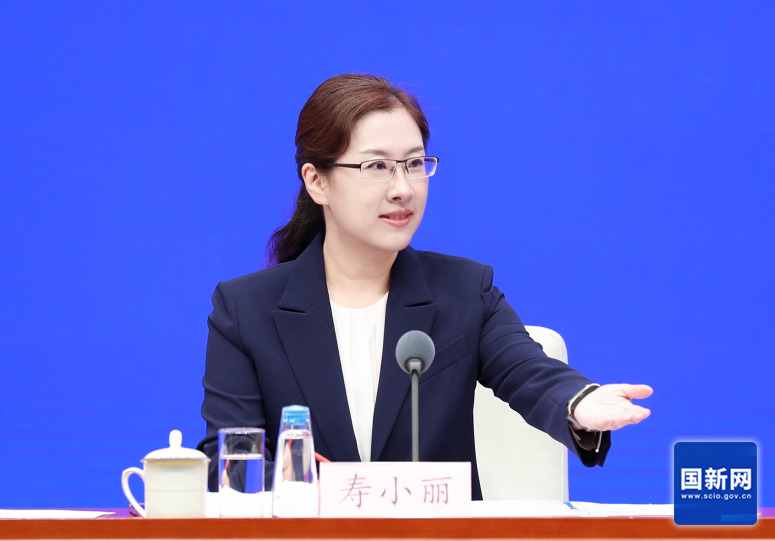
The picture shows Shou Xiaoli, deputy director and spokesperson of the State Council Information Office, inviting reporters to ask questions. (photo by Yan Haijun)
Beijing Youth Daily reporter:
In recent years, ASEAN has maintained its position as China’s largest trading partner. Would you like to ask about the import and export of trade between China and ASEAN this year? Thank you.
Lv daliang:
Thank you for your question. Let me first report the trade between China and ASEAN. In the first three quarters of this year, China’s import and export to ASEAN was 4.68 trillion yuan, up 0.8% year-on-year, accounting for 15.2% of China’s foreign trade. ASEAN continued to be China’s largest trading partner, and bilateral economic and trade exchanges also maintained a good development trend. Specifically:
First, industrial integration is deepening, and trade in intermediate products is close. Since 2012, ASEAN has been the largest trading partner of China’s intermediate products. In the first three quarters of this year, intermediate products accounted for 64.3% of the total import and export value between China and ASEAN. China and ASEAN have close cooperation in the fields of electronic information, automobiles and other industries. In the first three quarters, ASEAN was the largest source of imports of audio and video equipment parts, flat panel display modules and other products in China, and the import value achieved rapid growth; At the same time, China’s exports of auto parts, diodes, spare parts for automatic data processing equipment and lithium batteries to ASEAN have increased to varying degrees.
Second, the road of cooperation has been continuously broadened, and the trade in agricultural products has become richer and more convenient. With the new land-sea corridor in the west, the two cross-border corridors of China-Laos Railway and Tiehai Intermodal Train, which play a more and more important role in promoting bilateral trade, the access of agricultural and food products has been actively promoted, and the agricultural products with ASEAN characteristics have entered China more smoothly. In the first three quarters, China imported 193.24 billion yuan of agricultural products from ASEAN, an increase of 6.5%. The import performance of some special agricultural products was outstanding. The import of dried and fresh fruits and nuts was 61.46 billion yuan, an increase of 35.3%, of which fresh durian, mangosteen and pineapple increased by 81.1%, 17% and 14.4% respectively.
Last month, China hosted the 20th China-ASEAN Expo and the China-ASEAN Business and Investment Summit. In the past 20 years, the trade scale between the two sides has crossed the level of 6 trillion yuan, reaching 6.42 trillion yuan in 2022, and they have been each other’s largest trading partners for three consecutive years. Looking forward to the future, with the full implementation of RCEP, the negotiations on version 3.0 of China-ASEAN Free Trade Area will be accelerated, the areas of cooperation between the two sides will be further expanded, economic and trade exchanges will be further deepened, the trade development potential between China and ASEAN will be huge, and the "cake" of mutual benefit and win-win will be bigger and bigger. Thank you.
Nanfang Daily Southern+Reporter:
As for the export of green and low-carbon products, Director Lu just mentioned "three new products". Electric manned vehicles, lithium batteries and solar cells have been growing continuously in recent years. Can you tell us about the "new three samples" exports in the first three quarters of this year? What measures does the Customs take to promote the export of green and low-carbon products? Thank you.
Lv daliang:
Thank you for your question. At present, the green and low-carbon transformation of the global economy is accelerating, and China’s achievements in creating new green and low-carbon growth points are prominent, which has led to the rapid growth of the "new three" exports represented by electric manned vehicles, lithium batteries and solar cells. In the first three quarters, China’s "new three products" exported a total of 798.99 billion yuan, up 41.7% year-on-year, accounting for 1.3 percentage points of China’s exports, reaching 4.5%.
Customs continued to promote the innovation of supervision service mode, optimize the business environment of cross-border trade, pay attention to the demands of emerging industries such as "New Three Kinds", stimulate the business vitality and export power of enterprises, help improve the international competitiveness of products, promote the continuous release of new kinetic energy for the growth of "New Three Kinds" products, and better promote the development of global green and low-carbon economy. Thank you.
Shou Xiaoli:
That’s all for today’s press conference. Thank you, Director Lu Daliang. Thank you, journalists and friends. Goodbye.